How to Find Prior Art for a Software or AI Invention
Prior art search for software inventions starts with the relevant date and feature breakdown. Search patents and literature, verify dates, and map to claim features for strong analysis.
Editorial team · Esgenix
Esgenix Team is the shared byline for articles produced by the Esgenix team. Each article is reviewed by the company founders before it is published.
The team writes about patent drafting, prior-art and state-of-the-art search, freedom to operate, and how AI changes the day-to-day work of patent attorneys and in-house IP teams.
Esgenix is the agentic AI patent workflow platform for prior-art search, invention disclosure, patent drafting, landscape search, freedom-to-operate search, and invalidity search.
Reviewed by C R Jacob, Leo Paul Johnson and Deepak Thomas.
LinkedIn45 articles
Prior art search for software inventions starts with the relevant date and feature breakdown. Search patents and literature, verify dates, and map to claim features for strong analysis.
AI claim variants help you compare scope, limitations, support and prior-art exposure before filing, with counsel directing the claim strategy.
Check claim antecedent basis by confirming each later reference resolves to one unique earlier introduction and verifying specification support. Follow U.S. drafting conventions to prevent examiner issues. Review the full workflow.

To respond to obviousness rejection, map every claim limitation to the cited references and challenge the combination rationale. Choose the narrowest defensible response with supported amendments or evidence. Request a demo.

Assess patent validity and strength claim by claim: identify operative language and filing date, then test each limitation for novelty, obviousness, support, enablement and definiteness before evaluating practical strength.
File continuations for new claim strategies and divisionals after restriction requirements. Keep claims consistent with proper disclosure support in both.
Compare DeepIP and Ankar AI for patent drafting in 2026. Review workflows, source links, integrations, pricing visibility, and best-fit teams before choosing.

Compare Patlytics, Solve Intelligence, and Esgenix in 2026 by how each produces patent drafts, shows supporting evidence, and routes review for counsel.
See how Esgenix AI flags examiner-style objections before filing by surfacing claim support gaps and inconsistencies for review at the five decision gates. No predictions or guarantees. Request a demo.

Compare eight Solve Intelligence alternatives for patent drafting in 2026, including decision-gated workflows, Word tools, services, pricing visibility, and fit.
Compare eight Patlytics alternatives for patent work in 2026, from drafting and figures to search workflows, with fit, limitations, and pricing visibility.

Compare 10 DeepIP alternatives for patent drafting in 2026 by workflow control, drafting approach, figures, review, jurisdictions, and pricing visibility details.
Compare eight Ankar AI alternatives for patent drafting in 2026, including Esgenix, Solve, and DeepIP, by workflow, attorney control, price visibility, and fit.

ChatGPT can draft patent-shaped text but does not handle prior-art strategy or filing responsibility. Esgenix uses five decision gates for professional control. Request a demo.

Compare AI patent drafting software pricing structures including seats, matters, usage credits and pay-per-workflow options. Match the billable unit to your patent workflow needs. Request a demo

AI prior art search accuracy improves with claim-based reference closeness scoring. Human professionals retain control at the strategy gate while AI supports retrieval and prioritization.
Learn how to create a claim chart: break claims into limitations, map to evidence, add citations and note support levels. Sign up to start your first project.

Non-patent literature often determines novelty and claim scope. Learn how to locate, verify, and integrate NPL findings into claim strategy before drafting begins.

Learn how an agentic state of the art search uses specialist AI agents to cross-check findings and inform patent claim strategy before professional review.

Assess whether an invention is patentable enough to file before drafting begins using a six-check framework covering prior art, eligibility, and disclosure support.

Learn how to prepare a compliant information disclosure statement (IDS) and maintain accurate prior-art records across a patent portfolio under USPTO rules.

Understand what a thorough prior art search includes across patent documents and non-patent literature, and use a Search Stopping Record to know when to pause.

Esgenix launches Self-Serve, pay-as-you-go access to AI patent workflows for solo practitioners, smaller IP firms, businesses and independent inventors.
· 5 min read

AI has raised invention volume and filing pressure. Patent capacity no longer requires headcount when attorneys direct decisions and AI-led services execute the production work between five gates.

The AI patent drafting tools patent teams actually use in 2026, compared on how each works, security, and fit, from explainable drafting to Word-native assistants.
Seven AI patent drafting tools compared on how they show their work: redline audit trails, claim-to-disclosure mapping, citations, and prior-art grounding.

Seven AI tools for drafting patent claims compared on scope control, disclosure grounding, and antecedent and clarity checks under 35 U.S.C. 112.

Seven AI patent tools for in-house and corporate IP teams compared on security certifications, lifecycle coverage, and governance fit.

How AI parses specification text to extract elements, assign numerals, plan views, and reconcile every numeral to its description under attorney review.

How drafting cost in a corporate filing program scales with filing volume rather than team size, where the spend accumulates, and what counsel controls.

Agentic state-of-the-art search turns a patent landscape into a directed investigation: higher recall, an approved taxonomy, and business questions answered.
· 5 min read

How to run a freedom-to-operate search inside the drafting workflow so findings shape claim language while the claims are still adjustable.

A patentability search that feeds drafting starts with the disclosure meeting transcript and yields both a search report and an invention disclosure document.
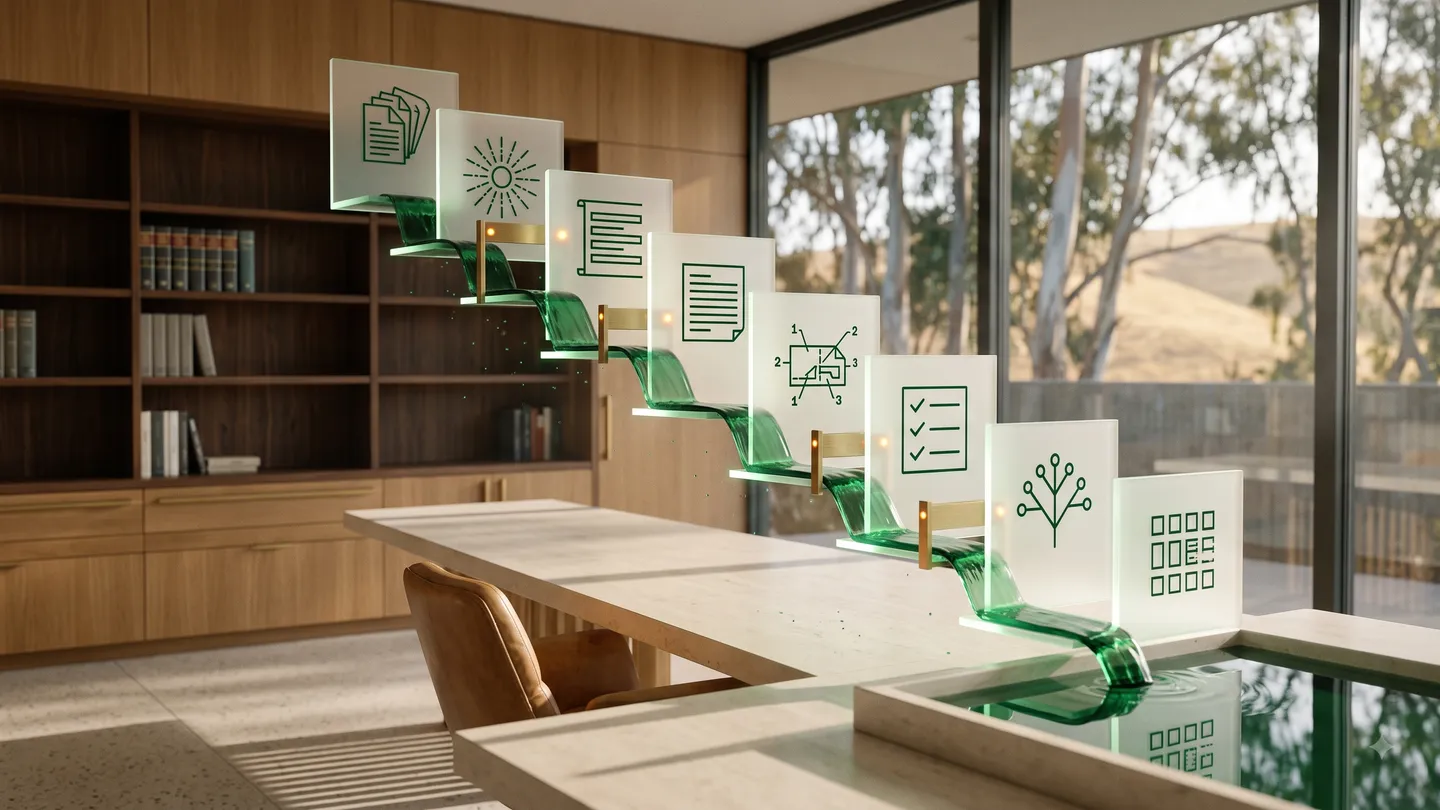
The eight stages of the patent workflow, the seams between them, and where the handoffs cost you time you never get billed back.

Three cost pools, only one of which gets measured. Why verification cost, not production time, decides AI patent drafting ROI for in-house teams.
Seven measures worth recording when you benchmark AI patent draft quality, the sample set to use, and the mistakes that invalidate the test.

One disclosure, three standards. What the USPTO, EPO and Indian Patent Office each require, and how to draft for all three without three drafts.

What actually changes for an in-house IP team when filings rise and headcount does not, and why assistance-shaped AI tools move the line less than expected.
How to test an AI patent drafting tool for grounding before you buy: provenance per claim element, gap detection, and a held-back reference.

Why the Indian priority document decides your US and EP outcomes, and what that means when evaluating AI patent drafting tools in India.

An agentic council uses multiple LLMs to debate and draft patents with explainable redline trails, secure storage options, and attorney oversight.

Opaque AI patent tools create hidden risks. Learn why visible claim-generation logic and audit trails are essential for compliance and defensibility.

Patent attorneys must protect client IP before filing. See how secure AI patent drafting with redline audit trails reduces confidentiality and disclosure risk.

Pasting invention details into ChatGPT or Gemini can risk confidentiality and novelty. Learn the legal exposure and safer secure drafting workflows.