DeepIP vs Ankar AI in 2026: Two Patent Drafting Routes
Esgenix Team · Published October 29, 2026
On this page
- DeepIP and Ankar AI Comparison Categories
- What Is a DeepIP vs Ankar AI Drafting Comparison?
- How we evaluated these platforms
- Research & Evidence
- The 2 Patent Drafting Routes
- Comparison Table
- How to Choose Between DeepIP and Ankar AI
- Getting Started With a Real-Matter Evaluation
- When You Want a Different Boundary Between Counsel and Automation
- Frequently Asked Questions
DeepIP vs Ankar AI in 2026: Two Patent Drafting Routes
DeepIP and Ankar AI take different, credible routes through patent drafting. Choose DeepIP if your team wants to keep drafting and review work close to Microsoft Word. Choose Ankar AI if invention materials, claim strategy, drafting style, and figures need to stay connected from the start. A third evaluation path is Esgenix for teams that want production work organized between explicit counsel decisions. This comparison is desk research based on published vendor materials, not hands-on testing or a performance benchmark. DeepIP describes a Word-integrated patent workflow in its company product announcement, while Ankar describes drafting from technical disclosures and inventor materials in its patent drafting materials.
DeepIP and Ankar AI Comparison Categories
The useful question is not which tool has the longer feature list. It is where your team wants patent work to begin, where the drafting happens, and how source context is carried into review.
Document-native drafting is DeepIP's route. It is designed for patent professionals who want AI support inside Microsoft Word and alongside familiar systems such as docketing tools.
Invention-context drafting is Ankar AI's route. It begins with technical materials and inventor inputs, then connects them to claim strategy, drafting preferences, figures, and related patent work.
Decision-gated patent production is a third evaluation lens represented by Esgenix. It asks a different question: which production work should the platform perform between substantive counsel decisions?
What Is a DeepIP vs Ankar AI Drafting Comparison?
A DeepIP vs Ankar AI comparison is a comparison of working methods, not just drafting outputs. Both vendors publicly describe tools that can support patent teams beyond isolated paragraph generation. But they begin from different assumptions about where patent professionals spend their time and how they want to review work.
DeepIP's published approach is centered on keeping practitioners in established document workflows, particularly Microsoft Word. That matters if associates, partners, patent agents, and outside counsel already draft, mark up, and review in Word. The central buying question is whether AI can fit into the team's existing document process without requiring a separate drafting workspace.
Ankar AI begins closer to invention capture. Its published drafting workflow accepts invention disclosures, technical documents, and inventor materials, then develops claim strategies, drafts, and figures. That approach may fit teams that want the invention record, preferred language, and patent-production work to remain connected from intake onward.
For either platform, assess five things before selecting a vendor:
- Starting point: Does work begin with a Word document, claims, a disclosure, or mixed technical materials?
- Working environment: Will professionals remain in their current drafting tools, or work in a dedicated platform?
- Review model: How are unsupported statements, claim inconsistencies, drawing references, and source material checked?
- Integration fit: Does the product work with your docketing, document-management, and matter processes?
- Commercial clarity: Are pricing, data handling, implementation, and support terms clear for your team?
How we evaluated these platforms
This comparison is not ordered by popularity, vendor claims, or paid placement. DeepIP and Ankar AI are assessed on the same four axes:
- How the draft is produced. Where the work starts, what the platform generates, and where the professional works.
- How the output is grounded. How claims and specification text are tied back to the invention disclosure and the cited art, and what a reviewer can trace.
- Data handling. Model training, retention, storage, and the options available for sensitive matters.
- Who it suits. The team, the tooling, and the matter type each route fits best.
Esgenix appears as a third route on the same four axes, because it draws the boundary between counsel decisions and automated production differently from either platform.
The evidence base is verified public information only: vendor documentation, published product pages, and stated security posture at the time of writing. This is desk research, not hands-on testing or a performance benchmark. Where a capability could not be confirmed from a public source, it is described as unconfirmed rather than inferred.
One disclosure. This article is published by Esgenix, which builds one of the platforms described here. It is included for that reason, and every claim made about the others is checkable against the same public sources cited throughout.
Product information checked: September 2026.
Research & Evidence
This article compares published product descriptions and does not treat vendor productivity claims as independently validated results. Both companies report efficiency outcomes on their public materials, but the supplied research does not establish a shared methodology, customer cohort, or test protocol that would support a direct performance ranking.
DeepIP publicly describes full-application drafting, prior-art work, patent review, and integrations intended to keep work in existing patent-team tools. Its AI Reviewer page specifically describes checks for issues such as antecedent basis, claim inconsistencies, dependency gaps, unsupported references, and missing drawing callouts.
Ankar publicly describes a connected workflow across invention disclosures, research intelligence, drafting, and related patent work in its product overview. Its disclosed drafting approach includes source-linked citations, firm preferences, claim strategy, and patent-ready figures.
Data-handling statements should be treated as vendor statements and reviewed during procurement. DeepIP states on its homepage that customer data is not retained or used to train its models. For Esgenix: Invention disclosures and drafting artifacts are not used to train models. Esgenix operates under zero-data-retention agreements with its model providers. Ankar states in its security note that customer data is not used to train models and is stored in a segregated, encrypted VPC environment. The supplied research summary does not identify a model-provider retention statement for Ankar.
The 2 Patent Drafting Routes
1. DeepIP: Best for Microsoft Word-Centered Patent Teams
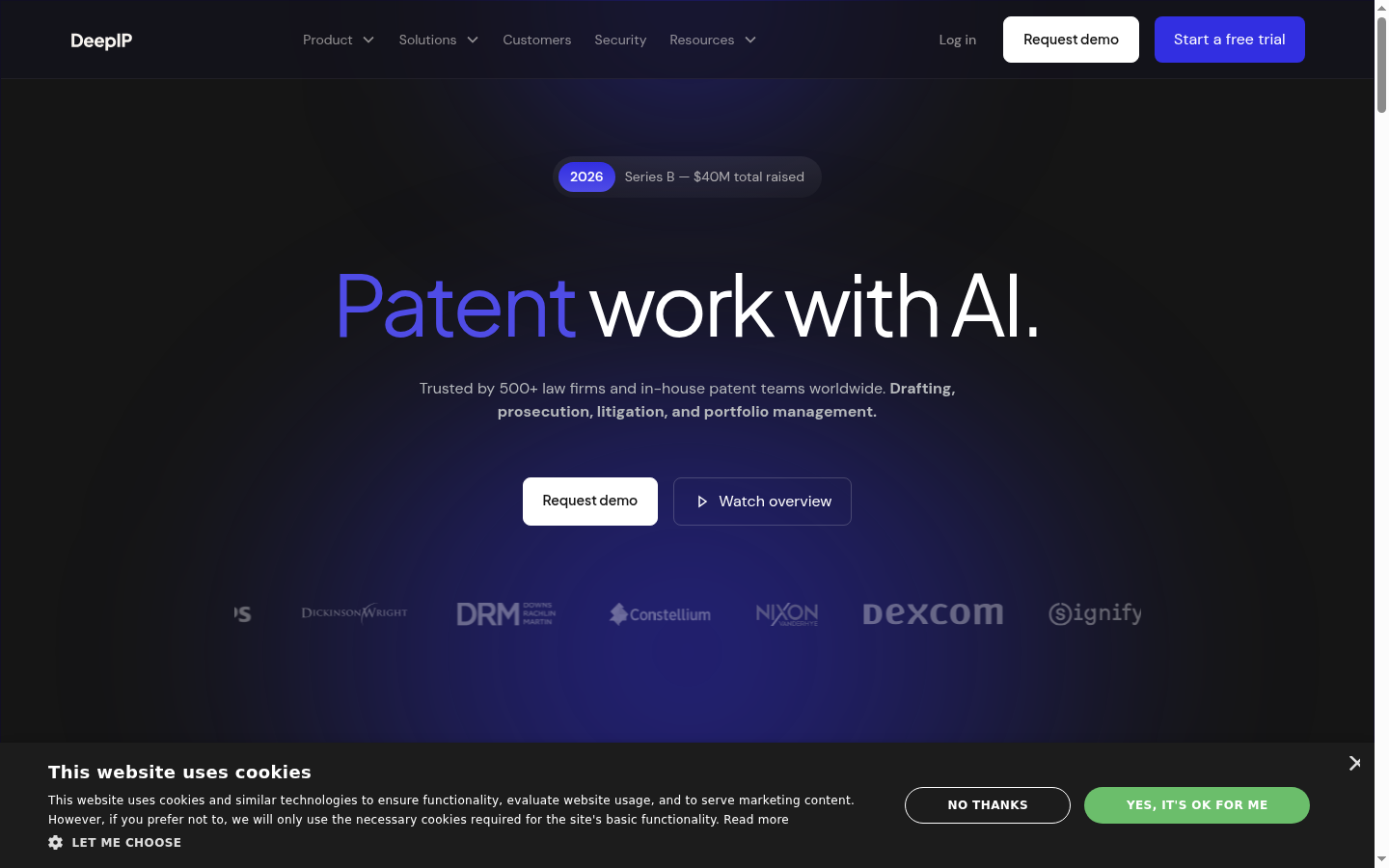
DeepIP is built for teams that want patent AI to work close to their existing document process. Its public positioning is especially relevant for law firms and in-house teams that already draft, review, and circulate applications in Microsoft Word.
Rather than asking the team to treat drafting as a separate AI workspace, DeepIP connects work across drafting, review, prior-art analysis, and office-action tasks. That makes its route practical when adoption depends on fitting familiar documents and review habits.
Key features:
- Microsoft Word-based drafting and review workflow
- Full-application drafting from invention disclosures
- Prior-art and patentability analysis
- Review checks for claim, specification, and drawing issues
- Listed integrations with Outlook, docketing systems, and REST APIs
Pricing: Public INR pricing was not disclosed in the supplied research materials.
Best for: Patent law firms and corporate IP teams that want AI support in a Word-centered drafting process.
Pros:
- Keeps drafting and review close to tools many patent teams already use.
- The AI Reviewer product page describes concrete pre-filing checks, including antecedent-basis and dependency issues.
- Covers connected patent tasks rather than only producing isolated draft sections.
Cons:
- DeepIP states that practitioners must validate outputs and apply professional judgment.
- Its published performance claims are vendor-reported, not independent benchmarks.
2. Ankar AI: Best for Connected Invention-to-Draft Workflows
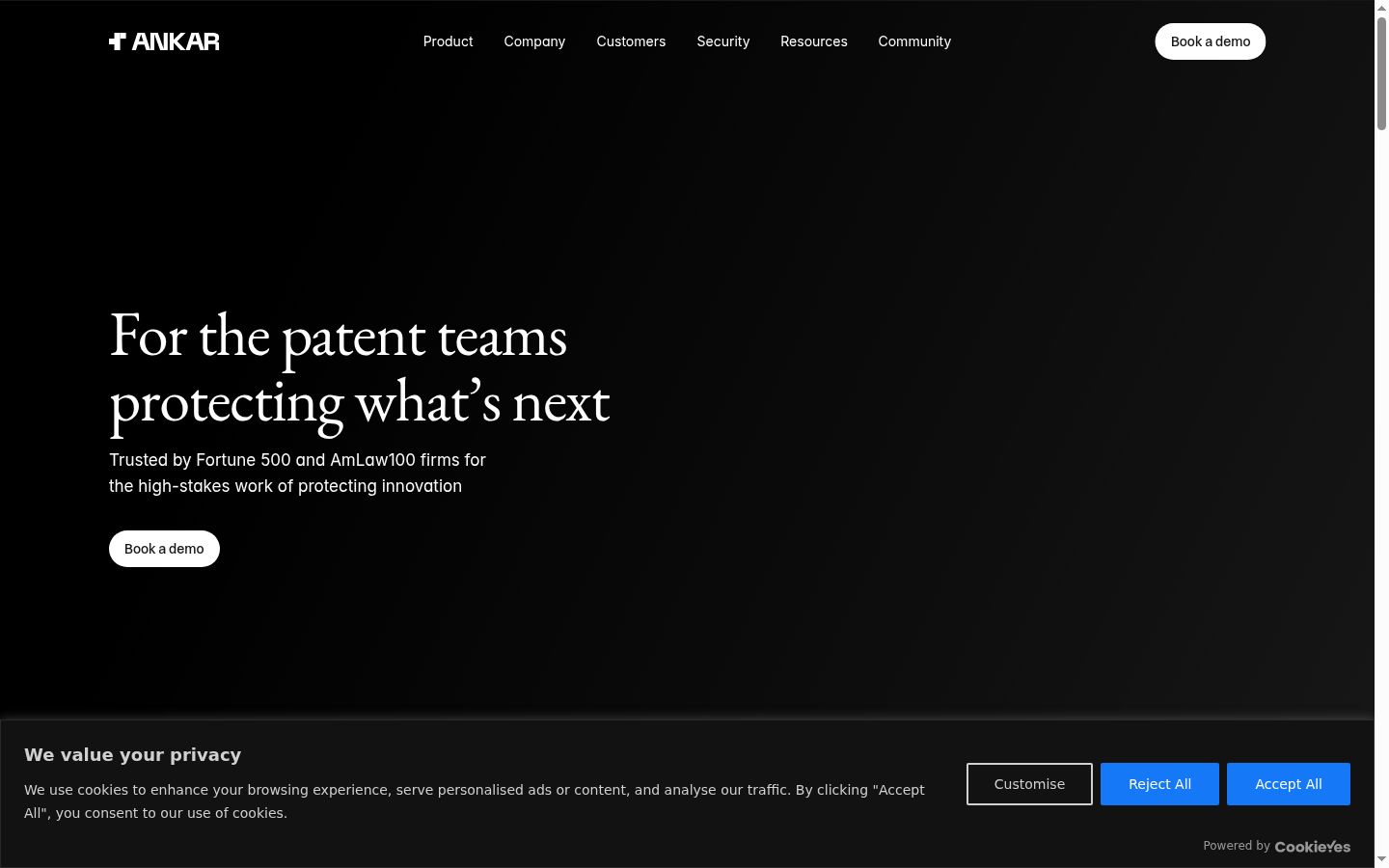
Ankar AI is designed for teams that want to begin with an invention disclosure and preserve technical context while moving toward claims, a patent draft, and figures. Its published approach is suited to teams that need invention capture and drafting preferences to travel together.
The platform states that it can identify inventive concepts from technical materials, develop claim strategies, apply firm terminology and drafting preferences, and generate patent-ready figures. That is a different route from document-native drafting. The emphasis is on building the application from a structured record of the invention and its supporting materials.
Key features:
- Invention-disclosure and technical-material intake
- Claim strategy development from inventor and technical inputs
- Firm-specific terminology, claim style, and drafting preferences
- Patent-ready figures, flowcharts, and supporting drawings
- Traceable citations from generated output to source documents
Pricing: Public INR pricing, subscription tiers, and per-user rates were not disclosed in the supplied research materials.
Best for: Patent and R&D teams that want invention intake, drafting preferences, figures, and research context connected in one working environment.
Pros:
- Its patent drafting page describes a direct path from technical source materials to claim strategy and style-aligned drafts.
- Supports firm preferences and terminology, which can matter for teams with established drafting rules.
- Links generated outputs back to source materials according to its published overview.
Cons:
- The reviewed public materials do not explain the methodology behind Ankar's published efficiency figures.
- Teams should confirm how the product fits existing document, docketing, and review procedures before rollout.
Comparison Table
| Product | Best for | Starting price | Starting point | Primary drafting route | Published review and source connection |
|---|---|---|---|---|---|
| DeepIP | Teams centered on Microsoft Word | Not publicly disclosed in INR | Invention disclosures and existing patent documents | Document-native drafting and review in Word | AI Reviewer checks claims, specifications, and drawing-related issues |
| Ankar AI | Patent and R&D teams connecting invention materials to drafts | Not publicly disclosed in INR | Technical disclosures, inventor materials, and supporting documents | Invention-context drafting with claim strategy and style preferences | Traceable citations link generated outputs to source documents |
How to Choose Between DeepIP and Ankar AI
Start with the workflow your professionals already trust. If attorneys and agents spend most of their drafting time in Word, DeepIP's document-native approach may create less change in the day-to-day drafting process. Ask the vendor to show how a real draft moves through review, redlining, partner feedback, and matter management.
If your larger problem is scattered invention context, Ankar may be a closer fit. Ask how disclosures, technical documents, inventor comments, claim strategy, preferred terminology, and figures remain connected when the draft changes.
Then test review, not only generation. A useful product demonstration should show how the platform identifies a potential problem, links it to the relevant source or document section, records the professional's change, and preserves the matter history.
Also examine integration and data terms early. Confirm how the platform works with Word, docketing, document storage, and your team's approval process. Security, data retention, access controls, and model-training terms should be reviewed in the contract and technical documentation, not assumed from a marketing page.
Finally, do not choose on headline time-saving figures alone. Run a controlled pilot using matters that resemble your usual work. Compare the time spent on intake, claim strategy, drafting, review corrections, figure reconciliation, and final partner review.
Getting Started With a Real-Matter Evaluation
A focused pilot gives you more useful evidence than a generic product tour. Use a matter that has a representative technical disclosure, known drafting preferences, and an attorney available to review the output.
- Define the starting material. Include the disclosure, inventor notes, existing drawings, and any relevant prior-art material your team is authorized to use.
- Set review criteria before generation. Decide who will assess claim scope, support, terminology, figure references, and filing readiness.
- Run the same evaluation questions. Ask each vendor to show intake, claim development, specification creation, figure handling, review findings, version history, and export.
- Track attorney work, not just first-draft speed. Measure the production work removed before professional review and the effort required to verify the result.
- Document implementation requirements. Capture required integrations, onboarding time, support expectations, and data-governance conditions.
When You Want a Different Boundary Between Counsel and Automation
DeepIP and Ankar AI offer two valid routes through connected patent drafting work. But some teams want to assess a different operating model: how much production work can be removed between professional decisions without moving substantive judgment to the machine.
Esgenix is a patent production system built around five explicit gates: Intake, Strategy, Claims, Specification & Figures, and Sign-off. Counsel directs the matter at each gate. Between those gates, the Esgenix Council performs production work across search, claim development, specification drafting, figures, and independent review. Its patent drafting materials describe claim provenance, Scope Slider for exploring breadth and fallback positions, and review processes designed to challenge work before Sign-off.
If your evaluation centers on the decision boundary, not just the draft-generation interface, request a demo from Esgenix and benchmark the workflow on a real matter. Counsel directs. Esgenix delivers.
Frequently Asked Questions
What is the main difference between DeepIP and Ankar AI?
DeepIP is positioned around a Microsoft Word-centered patent workflow. Ankar AI is positioned around connecting invention materials, claim strategy, drafting preferences, figures, and source-linked outputs in one workflow.
Does DeepIP work inside Microsoft Word?
Yes. DeepIP publicly positions its drafting and review workflow around Microsoft Word, with related integrations for tools such as Outlook and docketing systems.
Can Ankar AI use a firm's drafting style?
Ankar states that it can apply firm drafting preferences, claim styles, terminology, and best practices to generated patent drafts.
Do DeepIP or Ankar AI publish pricing in Indian rupees?
No public INR pricing was disclosed in the supplied research materials for either DeepIP or Ankar AI. Both vendors direct prospective buyers toward a sales or demo conversation.
Should I treat patent AI time-saving claims as guaranteed results?
No. Vendor-reported efficiency figures can be useful evaluation inputs, but they are not independent guarantees. Test each platform on representative matters and measure attorney review effort.
What should a patent team test during an AI drafting pilot?
Test invention intake, claim strategy, drafting quality, support for claim limitations, figure consistency, review findings, version history, integrations, and the professional effort required before filing.
See it on your own use case
Related articles

Patlytics, Solve Intelligence, Esgenix: Draft Evidence 2026
Compare Patlytics, Solve Intelligence, and Esgenix in 2026 by how each produces patent drafts, shows supporting evidence, and routes review for counsel.
Esgenix Team · Oct 29, 2026 · 11 min read
How AI Can Flag Examiner-Style Objections Before You File
See how Esgenix AI flags examiner-style objections before filing by surfacing claim support gaps and inconsistencies for review at the five decision gates. No predictions or guarantees. Request a demo.
Esgenix Team · Oct 29, 2026 · 9 min read

8 Solve Intelligence Alternatives for Patent Drafting 2026
Compare eight Solve Intelligence alternatives for patent drafting in 2026, including decision-gated workflows, Word tools, services, pricing visibility, and fit.
Esgenix Team · Oct 29, 2026 · 11 min read