Gate 01
Intake
Upload the invention disclosure in any format. Confirm the invention, answer the technical gap flags the agents raise, and set the jurisdictions: US, EP, IN.


AI patent drafting, prior art search, state of the art, freedom to operate, and invalidity in one patent production system. Built for IP teams at corporates and law firms.
Agents do the work. You approve every decision.
One platform
All of it agentic, the searches included. All of it directed, reviewed, and approved by a person before it leaves the platform.
Semantic search across 220 million patents from 108 jurisdictions and 100+ million research papers. It matches meaning rather than keywords. Agents surface spot-on references in graded rounds; you triage them, and the results position the claim set from the start of drafting.
Explore prior art searchFTO analysis that ends in a clearance report, a risk register, and a clearance map. It happens in the same platform as the drafting, not in a separate engagement with a separate vendor.
Explore freedom-to-operateFiling trend charts, landscape analytics, and maps of thinly patented areas and unsolved problem spaces. Analysis your team can build a filing strategy on.
Explore white space analysisChallenge a granted claim set: agents locate the art that matters and map each claim element to the disclosing passage, graded and documented for the record.
Explore invalidity searchA complete specification with claims, description, abstract, and figures, produced by specialist agents and native to US, European, and Indian practice.
Explore patent draftingComplete reports, presentations, Excel workbooks, and filing-ready Word specifications. Every one is reviewed by a person before it goes out.
Explore managed servicesSearch intelligence
Agents search patent corpuses spanning 108 jurisdictions, 220 million patents and 100+ million research papers in all, then build the analysis on top: trends, white space, clearance, invalidity. You set the scope, review every round, and decide what happens next. Agentic throughout; a person in the loop throughout.
220M
Patents searched
100M+
Research papers
108
Jurisdictions covered
4
Search workflows
Agents plan the search strategy, run it in rounds against 220 million patents and more than 100 million research papers, and surface the references that actually read on your features, each one graded and explained. You triage the results, workshop the features that matter, and direct the next round.
Charts of who is filing what, where, and how fast: assignee and classification analytics built from the full hit corpus, so you see the shape of a technology area before you commit to a position in it.
Maps of where a technology area is thinly patented and which problems remain unsolved. This is the analysis that turns a search from a defensive exercise into a filing strategy.
Freedom-to-operate work ends in a clearance report, a risk register with every flagged claim, and a clearance map of the landscape: documents your team can take into a product decision, not a list of links.
Give the platform a granted patent and the agents hunt the art that reads on its claims, mapping each claim element to the disclosing passage. The result is a charted invalidity position, reviewed by you before it goes anywhere.
Every search closes with documents you can hand over: Excel workbooks with the feature-by-reference matrix, presentation decks for the client meeting, and full written reports, each reviewed by a person before it goes out.
And because search and drafting live in the same platform, the references your team graded do not stay in a report. They position the claim set the moment drafting begins.
Not another copilot
Most AI tools in this space are copilots. They sit beside you while you write, suggesting text section by section, so your day is still spent producing paragraphs, now with suggestions to referee.
Esgenix inverts that. Specialist AI agents do the production: they search the art, build the analysis, draft the claims and description, draw the figures, and grade the result. Your time goes where it compounds: setting the search scope, workshopping the features that matter, deciding claim strategy, directing revisions, and approving what leaves the platform.
This is not a replacement for your judgment. It runs on your judgment. You will be deeply engaged in every matter. But it is engagement at the level of strategy and quality, with the production effort carried by the agents: less work than a copilot, and a better result than one.
With a copilot
You produce, it suggests
You prompt each section, review each suggestion, and stay at the keyboard for the whole draft. Your expertise is spent on assembly.
With Esgenix
You direct, it produces
Agents carry the searches, analysis, drafts, and figures to you for review. Your expertise is spent on scope, strategy, and approval.
Search That Improves the Draft
Semantic search across 220 million patents from 108 jurisdictions and more than 100 million research papers, matched by meaning rather than keywords. The output feeds the drafting agents in the same session: the claim set is positioned against the closest art from the start, and the specification carries fallback positions where the art is dense.

Technical Gap Detection
Before drafting begins, the platform identifies what the disclosure is missing, whether an unexplained step, an undefined term, or a result with no mechanism, and proposes how to close each gap.

Scope Slider
An on-screen control that broadens or narrows the claim set as you drag it, with support re-checked at every position. Breadth is explored in seconds rather than by hand.

Provenance on Every Element
Every claim element carries an identifier tracing it back to the passage of the invention disclosure it came from, so support for any element can be verified in minutes rather than by re-reading the file.

Agentic End-to-End Drafting
Drop an invention disclosure and specialist agents produce the complete package of specification, claims, description, abstract, and figures, native to US, European, and Indian practice, pausing for your review and direction at every stage along the way.

Figures From the Specification
The system reads the specification, decides what the figure set should be, draws it, and reconciles every reference numeral against the text. Nothing to sketch, upload, or convert.

A Quality Gate, Not a Spell-Check
An independent model grades the finished draft against the standards a senior patent attorney would apply, and sends it back to be rewritten if it fails. That removes the flat, generic texture of machine-written prose and catches the substantive defects underneath it.

Drafting Profiles
A stored house style covering claim formats, terminology, and section conventions, enforced across every agent, per client, so the fiftieth draft reads like it came from the same hand as the first.

Outcome-Based Pricing
Searches, analyses, and drafts are priced when they are delivered, across tiers.

Patent figures
The figure agents work two ways: give them nothing but the specification and they design and draw the figure set themselves, or hand them photographs and they convert them into formal line drawings. Reference numerals and leader lines are placed and reconciled against the text either way, and you review every figure before it ships.
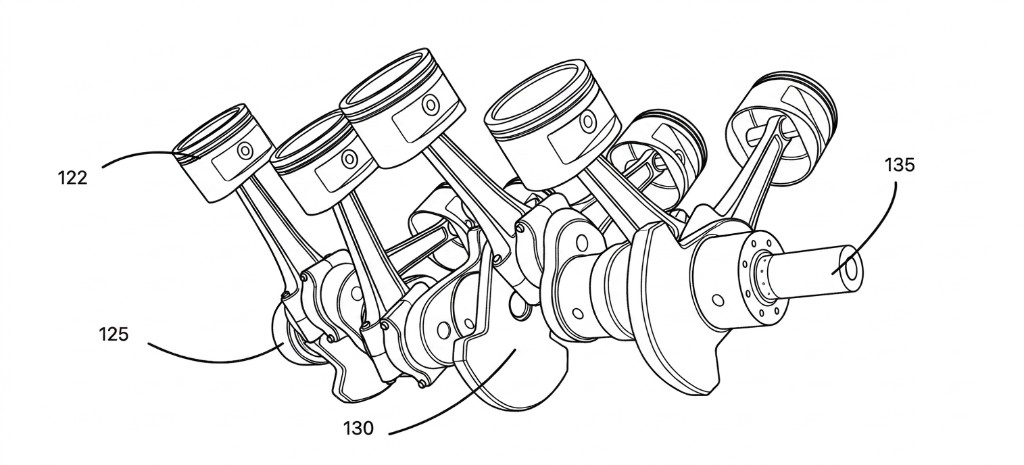
Generated from the specification alone
No sketch, no CAD file, no baseline drawing. The system read the specification, designed this figure, drew it, and numbered it, all autonomously.
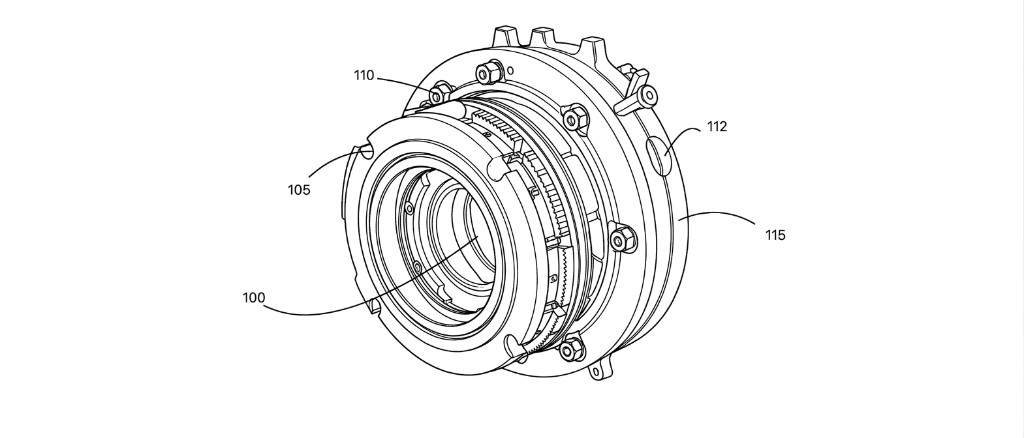
Converted from a photograph
Hand the agent an ordinary photograph and it comes back as a formal line drawing, with numerals placed and tied to the description.
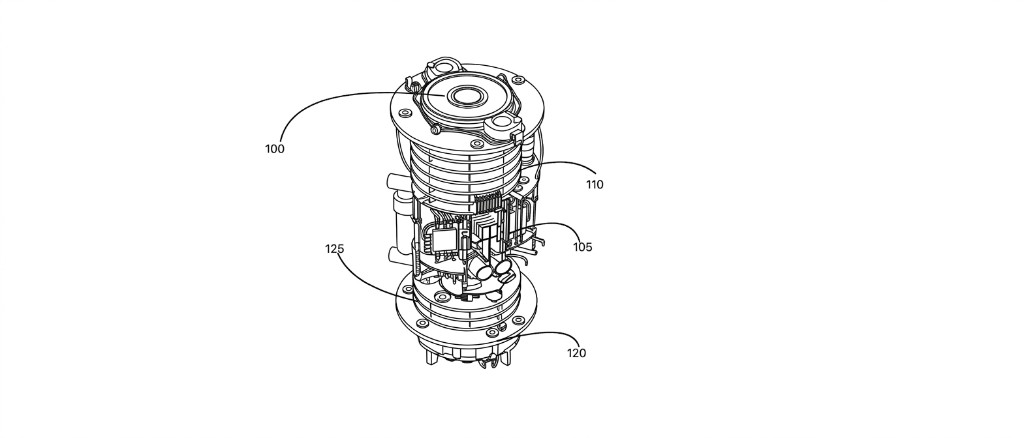
Converted from a photograph
Same workflow, different geometry: the agent traces the structure, drops the photographic texture, and produces the office-ready drawing.
These figures are shown for illustration only and do not belong to any invention.
Your inventions deserve certified protection. Esgenix holds ISO/IEC 27001:2022 and GDPR certifications, covering the platform and the handling of invention and client data.
Information security
Data protection
Learn more about security at Esgenix →
Each certification follows an external review of the controls in its scope.
Disclosures, drafts, and client information sit inside the scope of the certifications we hold.
Ongoing surveillance audits keep our controls aligned with the standards we hold.
The five gates
A gate is a point where the workflow stops and waits for your decision, five per application. The agents carry the production between them; nothing moves past a gate without your approval. Your involvement is not reduced. It is moved to the decisions worth an attorney's time.
Upload the invention disclosure in any format. Confirm the invention, answer the technical gap flags the agents raise, and set the jurisdictions: US, EP, IN.
Set claim breadth on the scope slider and choose fallback positions where the prior art is dense. Search results are already in the session, informing every choice you make.

Review the claim set the agents produced against the art they found. Approve, amend, or send back for another pass. Nothing proceeds without you. Compare variants and merge the strongest elements.

Review the full draft with provenance visible on every claim element. Figures are reconciled numeral-by-numeral against the text. An independent quality check has already graded the draft to attorney standards before it reaches you.

Your final review: nothing leaves the platform without your approval. Export the filing-ready application as DOCX, with figures as PPTX, and a full audit trail of every action taken during drafting.

Provenance & compliance
Under US practice, there is no general duty to tell the USPTO that an AI tool helped prepare a filing. But the USPTO's position is that the duty of reasonable inquiry cannot be delegated to the tool: relying on an AI system's accuracy does not by itself satisfy it. Verification has to be done by a person. And where AI involvement becomes material to patentability, it must be disclosed.
If verification cannot be delegated to the machine, then the machine's real job is to make verification fast. A tool that hands you fluent prose with no audit trail has given you the work and withheld the means of checking it. Esgenix is built the other way around.
Every claim element carries an identifier tracing it to the passage of the invention disclosure it came from. Support for any limitation is a two-minute check, not a re-read of the file.
What the disclosure is missing (an unexplained step, an undefined term, a result with no mechanism), surfaced at intake with proposed fixes, before drafting rather than in an office action.
The workflow stops five times per application and waits for your decision. Nothing moves to the next stage without your approval, and every approval is recorded.
Every action taken during drafting is documented and exports with the application, so what was reviewed, when, and by whom is never a matter of memory.
The rules above belong to the USPTO. The EPO and the Indian Patent Office take their own positions, but the general point travels: a person is responsible for what is filed, and the platform holds your approval, at every gate, as the record of it.
Who it's for
Corporate IP teams and the firms that serve them: each role gets a different answer from the same platform.
Filing volume rising, budget flat, and a board that wants IP framed as an asset rather than a cost.
You pay for delivered searches, analyses, and drafts, so cost tracks the work. White space analysis shows where the portfolio should grow.
Will a machine draft embarrass you in an office action? Do you now have to check the machine as well as do the work?
Five approval gates, provenance on every claim element, an independent quality grade, and technical gap flags at intake. Every decision remains yours, and verification is fast because the platform is built for it.
Consistency across drafters and outside firms, turnaround times, and a docket that has to keep moving.
Drafting profiles enforce a stored house style across every agent, per client. Output is native to US, EP, and IN practice, and routine filings can run on a different tier than crown-jewel matters.
Disclosures sit in a queue for weeks and come back full of open questions.
Gap detection turns "this needs more support" into a specific question your inventors can answer in one email. Figures come from the specification, with no draughtsman round-trip, and white space feeds the roadmap.
Managed services
Our team delivers the work for you on Esgenix, through the same review checkpoints, run by experienced patent professionals. You receive the same deliverables: complete reports, presentations, Excel workbooks, and filing-ready specifications.
FAQ

The whole patent workflow.
See a matter go from disclosure to filing-ready in a single session: searches, analysis, draft, and figures produced by agents, directed and approved by you.